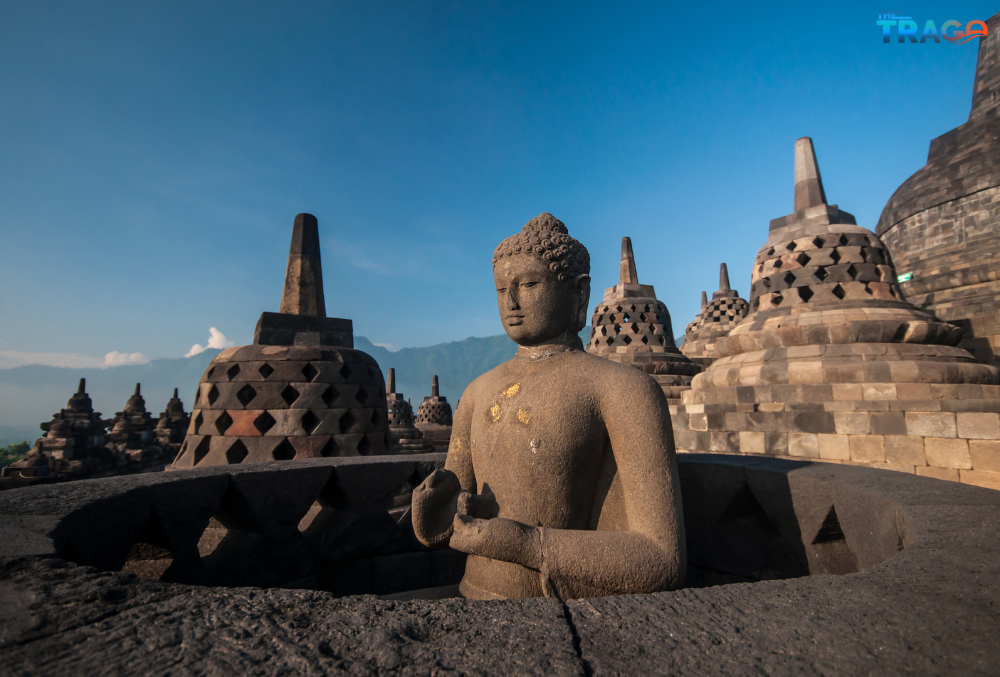

Borobudur Temple, located in Central Java, Indonesia, is the largest Buddhist temple in the world and a UNESCO World Heritage Site. Its grandeur and magnificence have made it a significant destination for travelers and pilgrims from all over the globe.
History of Borobudur Temple
- Borobudur was constructed during the 8th–9th centuries under the Sailendra Dynasty, which followed Mahayana Buddhism.
- The temple has a terraced pyramid structure with 9 levels, consisting of 6 square bases and 3 circular upper levels.
- After the spread of Islam in Indonesia, the temple was abandoned and later rediscovered and restored in the 19th century by Dutch archaeologists.
Remarkable Architecture and Design
1. The Base (Kamadhatu)
- Represents the world of desire and attachment (Kamadhatu). The carvings depict everyday life and human desires.
2. The Middle Levels (Rupadhatu)
- Represents the world of forms (Rupadhatu). These levels feature carvings about the life of Buddha.
3. The Upper Levels (Arupadhatu)
- Symbolize the world of formlessness (Arupadhatu) and enlightenment.
- These levels include 72 bell-shaped stupas, each containing a Buddha statue.
Highlights of Borobudur Temple
- Intricate Stone Reliefs
Borobudur features over 2,672 stone carvings that narrate Buddhist teachings, history, and cultural life of the era. - Buddha Statues
The temple houses 504 Buddha statues, some enclosed within stupas and others in open spaces. - Central Stupa
The large central stupa at the top symbolizes the ultimate goal of enlightenment.
Things to Do at Borobudur Temple
1. Watch the Sunrise
- Witnessing the sunrise at Borobudur is a magical experience as the first light of the day enhances the temple’s serene beauty.
2. Explore the Temple Grounds
- Take your time to walk around and admire the intricate carvings and architectural brilliance.
3. Learn About the History and Culture
- Dive into the stories of Buddhism and life during the Sailendra Dynasty.
Best Time to Visit Borobudur
- Dry Season (April-October): Offers clear skies and is ideal for outdoor activities.
- Visit early in the morning or late in the evening to avoid heat and crowds.
Tips for Travelers
1. Dress Modestly: As Borobudur is a sacred site, respectful attire is essential.
2. Bring Water and Comfortable Shoes: You’ll be climbing several steps.
3. Hire a Local Guide: A guide can help you understand the meaning behind the carvings and the temple’s history.
Borobudur Temple is more than just a religious site; it reflects the faith, creativity, and architectural prowess of ancient civilizations. Whether you are a lover of culture, history, or art, Borobudur is a must-visit destination that promises to leave you in awe.